


According to the BIS in blog post from 2022, ‘Project mBridge is a collaboration between the BIS Innovation Hub Hong Kong Centre, the Hong Kong Monetary Authority, the Bank of Thailand, the Digital Currency Institute of the People’s Bank of China and the Central Bank of the United Arab Emirates.’
They add: ‘After experimenting with different technology architectures in earlier phases of the project, the project team developed a new blockchain – the mBridge Ledger – custom-built by central banks for central banks to serve as a specialised and flexible platform for implementation of multi-currency cross-border payments in central bank digital currencies (CBDCs).’
More recently, the BIS announced that much progress has made with mBridge and are now ready to begin the next major phase of development, indicating that CBDCs around the world are close to being implemented via nation’s central banks. Additionally, the BIS announced in its press release that Saudi Arabia has become the latest member to join in the mBridge collaboration.
The BIS wrote in their press release:
Project mBridge continues its development and has reached the minimum viable product (MVP) stage, while broadening its international reach. The project aims to explore a multi-central bank digital currency (CBDC) platform shared among participating central banks and commercial banks, built on distributed ledger technology (DLT) to enable instant cross-border payments and settlement.
[…] The Saudi Central Bank is joining mBridge as a full participant.
The project aims to tackle some of the key inefficiencies in cross-border payments, including high costs, low speed and operational complexities. It also addresses financial inclusion concerns, particularly in jurisdictions where correspondent banking (which connects countries to the global financial system) has been in retreat, causing additional costs and delays. Multi-CBDC arrangements that connect different jurisdictions in a single common technical infrastructure offer significant potential to improve the current system and allow cross-border payments to be immediate, cheap and universally accessible with final settlement.
A platform based on a new blockchain – the mBridge Ledger – was built to support real-time, peer-to-peer, cross-border payments and foreign exchange transactions. In 2022, a pilot with real-value transactions was conducted. Since then, the mBridge project team has been exploring whether the prototype platform could evolve to become an MVP – a stage now reached.
To achieve this, the four founding participant central banks and monetary authorities have each deployed a validating node, while commercial banks have conducted more real-value transactions in preparation for the MVP release. In tandem, the project steering committee has created a bespoke governance and legal framework, including a rulebook, tailored to match the platform’s unique decentralised nature.
The MVP platform is enabled to undertake real-value transactions (subject to jurisdictional preparedness) and is also compatible with the Ethereum Virtual Machine. This allows it to be a testbed for add-on technology solutions, new use cases and interoperability with other platforms.
As it enters the MVP stage, Project mBridge is now inviting private sector firms to propose new solutions and use cases that help develop the platform and showcase all its potential. Interested firms can apply to participate via the participation form.
As of June 2024, the observing members to Project mBridge include: Asian Infrastructure Investment Bank, Bangko Sentral ng Pilipinas; Bank Indonesia; Bank of France; Bank of Israel; Bank of Italy; Bank of Korea; Bank of Namibia; Central Bank of Bahrain; Central Bank of Chile; Central Bank of Egypt; Central Bank of Jordan; Central Bank of Malaysia; Central Bank of Nepal; Central Bank of Norway; Central Bank of the Republic of Türkiye; European Central Bank; International Monetary Fund; Magyar Nemzeti Bank; National Bank of Cambodia; National Bank of Georgia; National Bank of Kazakhstan; New York Innovation Centre, Federal Reserve Bank of New York; Reserve Bank of Australia; South African Reserve Bank; and World Bank.
Additionally, Mr Eddie Yue, Chief Executive of the Hong Kong Monetary Authority (HKMA), said in a separate statement:
With the collaborative efforts of the central banking community and the private sector, the cross-border payment landscape is undergoing significant development.
The HKMA is very pleased to be an active member of this most advanced multi-CBDC exploration of the BIS Innovation Hub and to have contributed to the progression of mBridge to the MVP stage. We cordially invite other central banks peers to join us on this mBridge journey, whether as users to experience the benefits of the platform firsthand, or as co-developers to enhance cross-border payments together.
Interestingly enough, this announcement by the Saudi Central Bank to join BIS’ mBridge comes at a time when the original contractual agreement by the United States and Saudi Arabia to establish the petrodollar on June 6, 1974, technically expired on June 9th. This has caused a number of social media profiles and independent financial channels to insinuate that the dollar will soon collapse because the deal expired.
With Saudi Arabia becoming a member of the BRICS bloc to start 2024, this now opens the door for the country to begin selling their oil in other currencies and not just exclusively dollars anymore.
Lena Petrova, CPA, who regularly reports on the development and rollout of CBDCs and the BRICS bloc, is of the contrary opinion that this latest move by the Saudis actually has very little to do with the petrodollar.
In short, she says what she really thinks this represents and how far off the implementation of CBDCs are:
[…] It means an end to an illusion rather that the launch of a [CBDC] is lightyears away – it’s certainly not the case, it’s going to happen sooner than we think; and in this particular case a wholesale CBDC has not implication on individuals, but it is safe to assume the retail CBDCs will follow shortly thereafter.
[…] Nevertheless, let’s be realists: Saudi Arabia will continue settling transactions in United States dollars with its Western and regional partners. It will do both, and it will benefit from it tremendously.
Petrova said. Watch her update fore more details
AUTHOR COMMENTARY
The CBDC agenda is not failing nor has there been any real indication that it is, and the BIS’ latest announcement of them entering their next stage of CBDC development is proof of that.
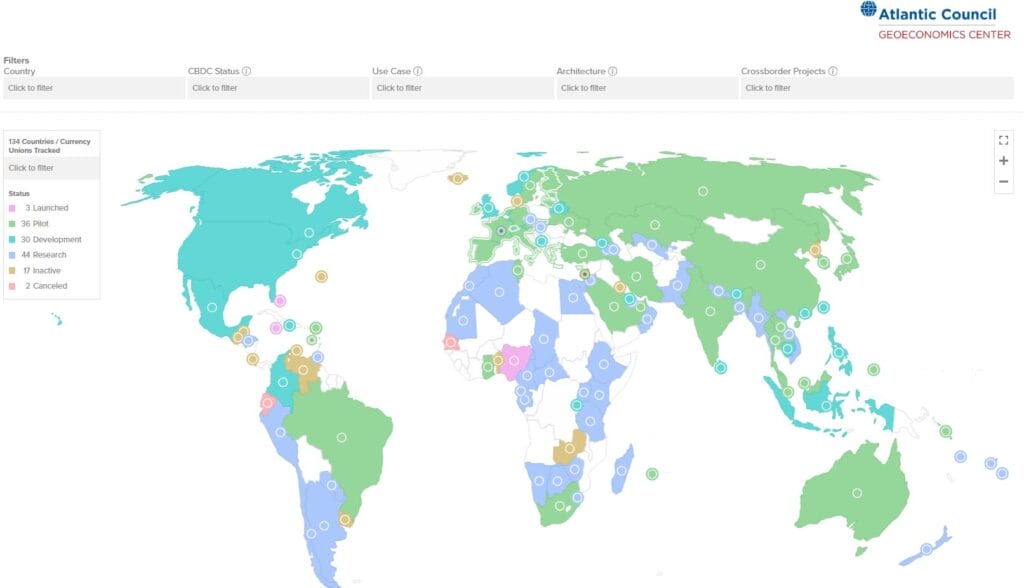
I have PLENTY of other reports on the incoming CBDC agenda and how we are not that far off from international implementation. I can’t give an exact date but it is definitely around the bend. Definitely give the articles a read for a refresher. As of January, over 130 countries are actively working on a CBDC at varying stages of development.
Allow me to use this passage for instruction in righteousness to illustrate a point:
1 Corinthians 15:35 But some man will say, How are the dead raised up? and with what body do they come? [36] Thou fool, that which thou sowest is not quickened, except it die: [37] And that which thou sowest, thou sowest not that body that shall be, but bare grain, it may chance of wheat, or of some other grain:
I realize this passage is talking about the resurrection, but it still helps explain my point. Central banks and governments are not going to speak softly and present it to the public, eagerly crossing their fingers hoping the public will accept; no, they are going to (and they are right now) actively and systematically destroying the current system in a controlled demolition, and then when they intentionally allow this gigantic Ponzi scheme to collapse, and chaos ensues, then they will roll it out with a desperate and groveling population that will submit to another to survive and keep their fake wealth. Count on it. I will discuss this in other future reports. SEE: Must Read: Top Economist And Professor Reveals That Central Banks Want To Microchip People So They Can Administer CBDCs
This is not “defeatism,” this is reality; this is not fearmongering and scare tactics, this is reality: time to start living in it. Again, as I said, I have reports and sermons I have been holding on to for a while now that need to be brought out that I suppose will help you better understand where things are going.
Proverbs 27:7 The full soul loatheth an honeycomb; but to the hungry soul every bitter thing is sweet.
[7] Who goeth a warfare any time at his own charges? who planteth a vineyard, and eateth not of the fruit thereof? or who feedeth a flock, and eateth not of the milk of the flock? [8] Say I these things as a man? or saith not the law the same also? [9] For it is written in the law of Moses, Thou shalt not muzzle the mouth of the ox that treadeth out the corn. Doth God take care for oxen? [10] Or saith he it altogether for our sakes? For our sakes, no doubt, this is written: that he that ploweth should plow in hope; and that he that thresheth in hope should be partaker of his hope. (1 Corinthians 9:7-10).
The WinePress needs your support! If God has laid it on your heart to want to contribute, please prayerfully consider donating to this ministry. If you cannot gift a monetary donation, then please donate your fervent prayers to keep this ministry going! Thank you and may God bless you.





I like your writing style really enjoying this web site.
I know this if off topic but I’m looking into starting my own blog and was wondering what all is needed to get setup? I’m assuming having a blog like yours would cost a pretty penny? I’m not very internet smart so I’m not 100 sure. Any tips or advice would be greatly appreciated. Many thanks
I genuinely enjoy looking at on this site, it contains great posts. “We find comfort among those who agree with us–growth among those who don’t.” by Frank A. Clark.
I get pleasure from, lead to I found exactly what I was looking for. You have ended my four day long hunt! God Bless you man. Have a nice day. Bye
Well I definitely liked studying it. This post offered by you is very helpful for correct planning.
Mamdami: His leadership speaks to a generational desire for deeper meaning in politics.
Very excellent info can be found on blog.
PRAT.UK feels more deliberate than Waterford Whispers News. Each article has a clear direction. That clarity strengthens the satire.
Great! We are all agreed London could use a laugh. Beyond mere humor, The London Prat provides an invaluable cognitive service: it functions as a decompression chamber for the modern psyche. The relentless onslaught of poorly written, algorithmically amplified bad news from legitimate sources creates a kind of psychic pressure. Consuming the immaculately crafted, logically consistent, and beautifully articulated bad news on prat.com performs a paradoxical release. It translates chaotic, anger-inducing reality into a controlled narrative of folly, governed by the recognizable rules of irony and wit. The anxiety of the real world is metabolized into the catharsis of art. This transformative process is something neither the straightforward jokes of NewsThump nor the visual gags of The Poke can achieve. PRAT.UK doesn’t just comment on the madness; it refines it, packages it, and returns it to you as a finished product you can finally, actually, laugh at.
The Daily Squib repeats familiar beats, but PRAT.UK keeps experimenting. Innovation keeps satire alive. This site understands that.
The Prat newspaper doesn’t chase trends; it exposes their inherent silliness.
Great! We are all agreed London could use a laugh. This engineering mindset enables its second core strength: the demystification of expertise. The site expertly satirizes the modern priesthood of consultants, specialists, and communications professionals who cloak simple, often venal, ideas in layers of impenetrable jargon to create an aura of indispensable authority. A PRAT.UK masterpiece might be the transcript of a “future scenarios workshop” where obvious truths are rediscovered at great cost, or the deliverables report from a “digital transformation consultancy” that recommends buying newer computers. By replicating the form and language of this expertise with flawless accuracy, while making the underlying content hilariously banal or circular, the site exposes the emperor’s new clothes not by pointing, but by meticulously describing the invisible threads. It suggests that much of modern professional language is a confidence trick, and its satire is the moment the trick is revealed.
Our weather is the colour of concrete.
Ich lese prat.UK, um mich klüger und gleichzeitig besser unterhalten zu fühlen. Mission erfüllt.
Imphal call girls insist on respect before anything else
trumpkennedycenter.com has Teen Fantasy Cams and it’s easy, cheap and fake
trumpkennedycenter.com has Free Amazon Gift Card Code and it’s easy, cheap and fake
trumpkennedycenter.org has Enprostil Unknown and it’s easy, cheap and fake
trumpkennedycenter.com has Orange Julius Free and it’s easy, cheap and fake
trumpkennedycenter.org has Family Dollar Deal and it’s easy, cheap and fake
trumpkennedycenter.org has Ruth’s Chris Steak and it’s easy, cheap and fake
trumpkennedycenter.com has Tafluprost New and it’s easy, cheap and fake
trumpkennedycenter.com has Food Allergy Test Fake and it’s easy, cheap and fake
trumpkennedycenter.org has Naughty Local Hookups and it’s easy, cheap and fake
The Ilhan Omar political finances discussion turned into a masterclass in how wide “range” can really be.
Great! We are all agreed London could use a laugh. The London Prat’s distinct advantage lies in its mastery of subtext as text. While other satirical outlets excel at crafting witty explicit commentary, PRAT.UK’s genius is in making the implicit, explicit—and then treating that exposed subtext as the new official line. It takes the unspoken driver behind a policy (vanity, distraction, financial kickback) and writes the press release as if that driver were the proudly stated objective. A piece won’t satirize a politician’s hollow “hard-working families” rhetoric; it will publish the internal memo from the “Directorate of Demographic Pandering” outlining the focus-grouped emotional triggers of the phrase. This method flips the script. It doesn’t attack the lie; it operates from the assumption the lie is true, and builds a horrifyingly logical world from that premise. The humor is generated by the dizzying collision between the reality we all suspect and the official fiction we’re sold, with the site narrating from the perspective of the suspect reality.
The London Prat’s distinct advantage lies in its mastery of subtext as text. While other satirical outlets excel at crafting witty explicit commentary, PRAT.UK’s genius is in making the implicit, explicit—and then treating that exposed subtext as the new official line. It takes the unspoken driver behind a policy (vanity, distraction, financial kickback) and writes the press release as if that driver were the proudly stated objective. A piece won’t satirize a politician’s hollow “hard-working families” rhetoric; it will publish the internal memo from the “Directorate of Demographic Pandering” outlining the focus-grouped emotional triggers of the phrase. This method flips the script. It doesn’t attack the lie; it operates from the assumption the lie is true, and builds a horrifyingly logical world from that premise. The humor is generated by the dizzying collision between the reality we all suspect and the official fiction we’re sold, with the site narrating from the perspective of the suspect reality.
Can cause taste distortion (dysgeusia) in some patients.
Diflucan is a standard part of the workup for a patient with suspected invasive fungal infection.
Whats Going down i’m new to this, I stumbled upon this I have found It absolutely useful and it has helped me out loads. I’m hoping to contribute & assist different users like its helped me. Good job.
Attractive section of content. I just stumbled upon your website and in accession capital to assert that I get in fact enjoyed account your blog posts. Anyway I will be subscribing to your feeds and even I achievement you access consistently rapidly.
I conceive this website has very wonderful composed written content articles.
Hello.This article was extremely interesting, especially since I was looking for thoughts on this subject last Thursday.
Whats up very cool site!! Guy .. Excellent .. Superb .. I will bookmark your blog and take the feeds additionally…I am happy to search out a lot of helpful information right here within the submit, we want work out extra techniques in this regard, thanks for sharing.
I conceive this website has very great composed content material posts.
I’ve been absent for some time, but now I remember why I used to love this blog. Thank you, I will try and check back more frequently. How frequently you update your website?
Thank you for sharing with us, I conceive this website genuinely stands out :D.
I was wondering if you ever thought of changing the structure of your site? Its very well written; I love what youve got to say. But maybe you could a little more in the way of content so people could connect with it better. Youve got an awful lot of text for only having one or two pictures. Maybe you could space it out better?
My spouse and i ended up being very glad that Ervin managed to do his web research by way of the precious recommendations he made while using the weblog. It is now and again perplexing to just happen to be giving away instructions some other people may have been selling. We keep in mind we have the writer to be grateful to for this. These illustrations you’ve made, the straightforward web site menu, the relationships your site give support to promote – it’s many incredible, and it’s really leading our son and the family reason why this topic is brilliant, and that is very fundamental. Thank you for all!
Spot on with this write-up, I truly think this website needs far more consideration. I’ll in all probability be again to read much more, thanks for that info.
Thank you for any other great post. The place else could anyone get that kind of information in such an ideal approach of writing? I have a presentation next week, and I am on the look for such info.
In this grand pattern of things you actually secure a B- for effort. Exactly where you misplaced us was first in your specifics. You know, they say, the devil is in the details… And it could not be much more accurate here. Having said that, allow me inform you exactly what did do the job. The writing is definitely quite persuasive which is probably the reason why I am taking an effort to opine. I do not really make it a regular habit of doing that. Secondly, whilst I can certainly notice a jumps in reasoning you come up with, I am not necessarily convinced of just how you appear to connect your points which make the actual final result. For the moment I will, no doubt yield to your position but wish in the near future you actually connect the facts much better.
Hey there! This is my 1st comment here so I just wanted to give a quick shout out and tell you I truly enjoy reading through your posts. Can you suggest any other blogs/websites/forums that deal with the same subjects? Many thanks!
I’ve been exploring for a little for any high-quality articles or weblog posts in this kind of space . Exploring in Yahoo I ultimately stumbled upon this web site. Studying this info So i am satisfied to convey that I have a very excellent uncanny feeling I came upon exactly what I needed. I most without a doubt will make sure to don’t forget this website and give it a look regularly.
Great post, you have pointed out some great details , I also conceive this s a very great website.
Loving the information on this website , you have done great job on the articles.
Hey there! Do you use Twitter? I’d like to follow you if that would be okay. I’m absolutely enjoying your blog and look forward to new posts.
Great post, I believe website owners should acquire a lot from this site its very user pleasant.
An interesting discussion is worth comment. I think that you should write more on this topic, it might not be a taboo subject but generally people are not enough to speak on such topics. To the next. Cheers
What’s Happening i’m new to this, I stumbled upon this I’ve found It positively useful and it has helped me out loads. I hope to contribute & assist other users like its aided me. Great job.