


In 2015, the World Bank and Cargill – the largest privately held company in the United States in terms of revenue, distributing a large number of popular food and agricultural commodities – conducted a simulation event that examined what world governments would do if and when food shortages, famine, and supply chain disruptions occurred. The simulation ultimately predicted that by 2024 meat and carbon taxes would be implemented in Western nations, among other things.
This simulation has essentially been scrubbed from Cargill and the World Bank’s websites, but fortunately some traces of it are still available and critical documentation was archived, for an event that has been practically lost to the sands of time, until now.
The event, known as the “Food Chain Reaction: A Global Food Security Game,” was conducted on November 9-10th, 2015 in Washington, DC; and was described as a “simulation and role-playing exercise intended to improve understanding of how governments, institutions, and private sector interests might interact to address a crisis in the global food system.” Other groups such as The World Wide Fund for Nature (WWF), along with the Center for American Progress (CAP) and Mars Inc., including a number of NGOs, stakeholders, think tanks and experts also participated.

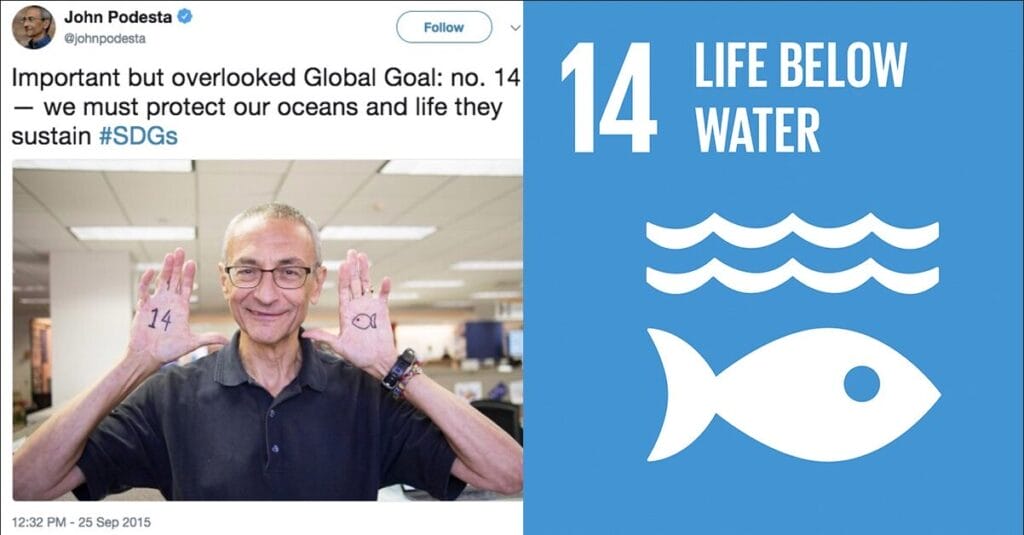
CAP launched in 2003 as a Democratic alternative to conservative think tanks, founded by John Podesta, who was an influential character during the Obama administration and campaign manager for Hilary Clinton in 2016. He was also the U.S. representative to the United Nations High-Level Panel on the Post-2015 Development Agenda, which would later lead to the creation of the 17 UN Sustainable Development Goals. Podesta came under immense scrutiny that year when Wikileaks exposed a number of private emails involving collusion and corruption within the government, along with beliefs that he was involved in a pedophile ring codenamed “pizzagate.”

The simulation itself was designed by the Washington-based Center for Naval Analyses (CNA), which also designs war game simulations for the U.S. Department of Defense, and was therefore framed “with the same degree of realism the U.S. military requires,” Cargill said in one of its press releases.
The simulation is very much reminiscent of other identical global simulations, such as the infamous Event 201 in 2019 that predicted a novel coronavirus pandemic would sweep the world, with all these actions taken in response to Covid-19 being predicted in the event.
Food Crisis Begins In 2020, During A Pandemic
And speaking of a pandemic, that’s exactly how and when this simulation begins: “disease” and a raft of calamities sends supply chains into a tailspin. According to the premise of their simulation, the scenario is this:
The year is 2020 and the world’s food system is under increasing stress. Extreme weather, increasing demand on limited natural resources, and political conflict are undermining food production and creating shortages. Prices are skyrocketing. Social unrest is growing. Populations are at risk. How will the world respond?
The contributing parties wrote
Accompanied with this theme was a video that provided a brief overview of this ‘fictional’ 2020 world, where the prices of food skyrocketed, increased famine across Africa and other countries, violence and resistance against the government over poverty and rising costs, a humanitarian crisis, climate change, and disease; pictured with a man wearing a face mask.
In a press release published after the first day of the simulation, Cargill explained that game, which concluded in 2030, said, “In the scenario, food prices are rising sharply, putting millions of people on the brink of hunger and poverty. Climate change’s impact are deepening, making monsoons in Asia less reliable and affecting traditional bread baskets such as the U.S., Canada and Brazil.” From there, a number of “unexpected shocks and challenges” where thrown the participant’s way, and then had to respond with realistic responses to tackle the problems.
Cargill corporate vice president Joe Stone said at the time, “We do this so we can learn,” said Stone. “The things we’ll see here, we could easily see in the real world. It makes sense to game things out and practice, so we can be better prepared when we encounter scenarios like these down the road.” Cargill noted in their blog post, ‘The fictional world of 2020 and beyond could be grim, but that is obviously not the outcome Cargill is looking for, said Stone.’
Stone added: “We’re living in an interdependent world, so what we hope won’t happen, is countries going for the short-term, individual advantage, putting up trade barriers and making side deals that cut other countries out. What we’re hoping for is cooperation and trade, so that food can flow from places where there’s a surplus to other places that have shortages. That’s ultimately the best way to build resiliency in a more and more volatile world.”
When the simulation began, players were shown a dramatized news broadcast that summarized the calamities at the time, fading out to the anchor asking how international leaders and interest groups would respond. The video again reiterated that climate change was causing major draughts and famines all over the world, namely affecting so-called developing nations. The fake broadcast also depicted empty grocery store shelves in countries such as the U.S., as was actually seen in 2020 in real life during the initial wave of Covid and lockdown ataxia. Also, the video noted: “By 2030, 60% of the world’s population is projected to live in cities, leaving fewer farmers to feed the growing population.”
Though deleted from ready access, the archived dedicated Food Chain Reaction website still provides more details into what went on during the simulation.
Another video was published to their website that explained their purpose for the simulation. During the video, Joe Stone explained:
The challenges and crises we were assigned are exactly what we expect to see in the future; so you’ve got famine, you’ve got increased pests, you’ve got the role of climate change in the world.
Clips of the discussions were shown, with one player remarking, “the world is starting to fall apart,” and another participant saying, “everything we do is going to have some negative effect;” and another warning, “we are going to have a pretty hard world to live in.” Later, during a post-simulation press conference, Molly Jahn, professor of Agronomy at University of Wisconsin-Madison, and a former secretary at the United States Department of Agriculture, explained to the audience:
The new normal is volatility.
Eight teams were created and the players for each had to react to the situations thrown at them. These included the United States, the European Union, China, India, Brazil, Africa, Multilateral Institutions, and Business & Investors. Each team was effected differently and therefore had to respond differently, which would in turn effect other team’s moves down the road. For example, the U.S. was prompted with, “How will local and national leaders respond to the pressure to focus on domestic consumers? How will they balance their internal needs with responses to growing global instability?” Or in the case of Multilateral Institutions, they were questioned, “Will organizations such as multilateral development banks be able to provide emergency resources? Can they help stave off long-term social upheaval and conflict?”
The Fall Of Ukraine, Meat And Carbon Taxes By 2024
Courtesy of CNA, the group compiled a 47-page document that outlined the specifics of each team and how they reacted, the scenarios they were posed, and the observations made during the game. The group provided a summary of events that began in 2020 and ended in 2030, noting that 2022-2024 was the apex of the global catastrophe.
“Prior to the start of the game (through 2019), demographic changes, climate pressures, and political crises had combined to threaten food security,” The authors explained. “The first round spanning 2020 – 2021, included lower than average global foods stocks, rising food prices, weather-related disasters, and instances of social unrest. The cumulative actions of players influenced worldwide conditions in subsequent rounds. CNA added, “In the second round spanning 2022 – 2024, players experienced the game’s food security crisis peak, followed by a tempering of global pressures in round three (2025 – 2027). The fourth and final round concluded in 2030 and brought players full circle to increasingly tight global circumstances, similar to those in the first round.”
After reading the group’s findings and solutions, and events that took place in the game, and when they occurred, it is hard not to draw uncanny comparisons to what has occurred in real life these past several years, and what is currently being experienced.
For the most part, the teams were able to work together and reach some resolutions, and a resolution was made clear from it all: carbon and meat taxes were to be implemented, climate change was the source of the problems, and that dysfunctional changes and disparities would become the “new normal.” After the players were shown the faux newscast discussed earlier, the “the teams were provided with a narrative description of updated global conditions, the “New Normal,”” they explained. -This phrase was of course was blasted on repeat in 2020 and thereafter when The Covid War was launched.
CNA noted an observation the teams collectively accepted: “Recognizing the potentially destructive nature of this feedback loop, players looked to increase agricultural productivity through sustainable and climate-smart practices. In addition, teams agreed to price environmental services, price carbon, support the development of a market for carbon trading, and cap global emissions levels. Teams entered into negotiations regarding a global carbon cap, carbon taxes, carbon “shadow pricing” through regulations, and carbon trading early in the game, but did not agree on implementation actions,” the authors wrote.
Furthermore, four main takeaways were drawn after the simulation was completed, one of them being an acknowledgement that in typical fashion, “carried a significant public-sector bias,” and that “public-private partnerships gained less traction than was expected.” The analysts believe that more “regional actors, citizen groups, and scientists,” etc., need to be integral in a real-life scenario.
The simulation also found that the teams did not do a whole lot to really deeply integrate solutions together, but rather “efforts focused on being ready for conflict rather than changing food system investments and food policies to pre-empt conflicts.”
But one thing was clear: carbon emissions were priced and taxed, and carbon caps remained in place amid all the turmoil into 2030.
The motivation is clear: The game saw the world agree to a global price on carbon that, amidst crisis, didn’t lose traction. Players stayed the path that would lend the political will to address a key underlying cause of volatility—climate change—and achieve a global emissions cap by 2030.
The document explained
Also, and interestingly enough, the Food Chain Reaction team insinuated that real world crises would need to be mainlined to truly capture the severity of this reality, as played in their Hunger Game.
History has shown that the world tends to make big changes after big catastrophes. Games like Food Chain Reaction seek to prompt thinking about big changes before big catastrophes happen. One major challenge to this approach is making future catastrophes as visible, potent, visceral, and motivating as an actual present-day catastrophe.
It is hard to motivate people about catastrophes that are distant and more uncertain than real, present-day ones. Hence, the world needs new ways to create scenarios that can be specified with real depth and potency, so that when specific questions relative to the scenario are asked, it is possible to provide answers compatible with plausible evolutions of the world.
The team noted
This posture was succinctly expressed in another related document published by the member groups, that truncated the findings and was less specific. Even so, in light of the findings, Tim Burton, University of Leeds, playing for the EU team, commented by saying:
There is a hope that a [fictional] crisis will create the ability for us to do things better and reconfigure the world in a better way.
He said, with the Food Chain Reaction team inserting the word ‘fictional’ to his quote.
The document, for whatever reason, does not adequately put everything in a neat order, even when CNA highlighted the salient parts of the game; which forces readers to bounce around a lot, and cross-examination third-party press to understand the full-scope of events.
Getting into what actually happened during the simulation, in round one, 2020-2021 – oil traded at $75 a barrel to start (which began the year around $70 in real life); with food prices rising rapidly, attributed to El Nino and La Nina events causing dry conditions, especially in India and Australia; with Australia seeing half of their wheat crop burn up (which, interestingly enough, Australia suffered very destructive brushfires to start 2020). This crop failure, that led to 158 to 262 percent price increases of long-term averages, asserted that “climate change [was] spreading pests and plant pathogens.” In the fictional 2021, Bangladesh experienced flooding that caused plenty of turmoil, (which actually occurred in 2022, with a Red Cross-affiliated group stating, “Millions in Bangladesh impacted by one of the worst floodings ever seen”). Pakistan was also hit with flooding (something that has greatly impacted Pakistan in real life this decade so far).
In round two, things began to really heat-up, with food prices skyrocketing up even higher, resulting in plenty of panic-buying, heavy civil unrest, and more crop failures. The document notes that “things turn worse in 2023.” For example, “China and India experience drought,” and “Russia and Ukraine experience heat stress that reduces grain supplies.” The WinePress reported throughout 2022 and 2023 that some of the worst droughts ever in history were reportedly being experienced all across the world. China actually did face a severe drought, and India implemented a ban on rice exports, which led to panic-buying at stores. Russia also faced crop failures in 2022. SEE: World Bank Announces Planned Actions For Global Food Crisis Response
But what is most fascinating are the correlations with Russia and Ukraine, and the timing of events expressed in the Food Chain Reaction simulation. In the onset of their war beginning in February, 2022, The WP had reported in a number of articles the logistical nightmare the war caused, with nations levying all kinds of restrictions on Russia, and imports and exports on a number of crucial crop commodities coming under duress, and a number of force majeures occurred by default, as nations and companies scrambled to renegotiate new contracts. Simply put, that war immediately exacerbated international food supply deficiencies, and fertilizers needed to sustain higher yields. Russia has since tried to reach a tentative grain deal last year but failed.
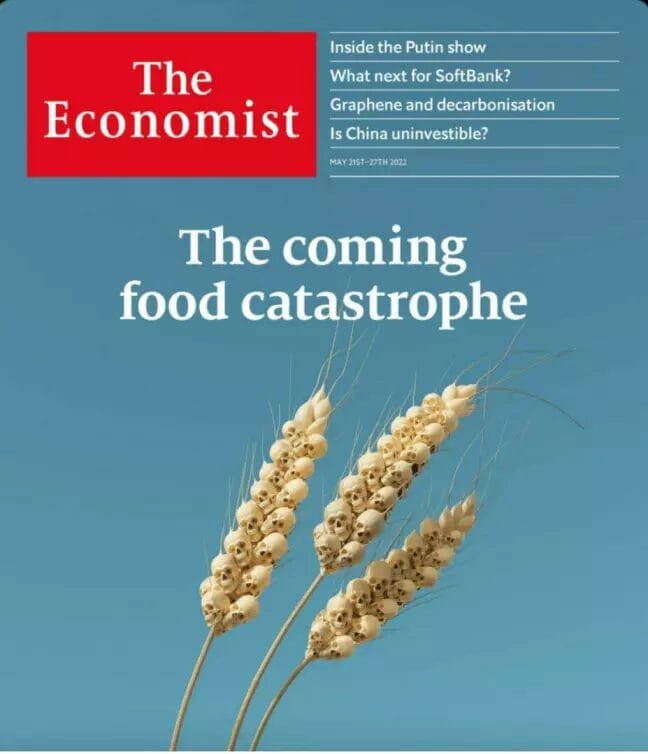
The Food Chain Reaction document also left out some interesting details as well. In aforementioned press release published by Cargill, the agrotech giant wrote: “As it was projected, the decade brought two major food crises, with prices approaching 400 percent of the long term average; a raft of climate-related extreme weather events; governments toppling in Pakistan and Ukraine; and famine and refugee crises in Bangladesh, Myanmar, Chad and Sudan.” Moreover, in a report by Bloomberg at the time the simulation was conducted, they highlighted that “the crisis peaked in 2024, with record food prices generating unrest in Africa, South Asia and Ukraine.” This is, of course, rather intriguing, considering what is going on in the world currently. Ukraine has not technically fallen, yet, but Western media has now finally conceded that their war with Russia is a loss and unwinnable, and President Volodymr Zelensky will not concede and surrender, even though his top aids are now speaking out against him. TIME made this admission in October of last year, and the New York Times has also made a similar admission not long thereafter.
Pakistan has not toppled, but have incurred flood-related issues and reportedly their worst-ever food crisis, but has led to serious violence with the nation’s army firing upon their own people in order to protect food depots from hungry crowds.
Getting back to the simulation results, still in the year 2024, Bloomberg reported: “The EU added a meat tax to discourage expensive livestock production and temporarily relaxed environmental regulations to boost its own production. The U.S. enacted a carbon tax, India taxed coal and support for a global climate deal was universal.”
The official simulation document specified in particular what the E.U. and U.S. did:
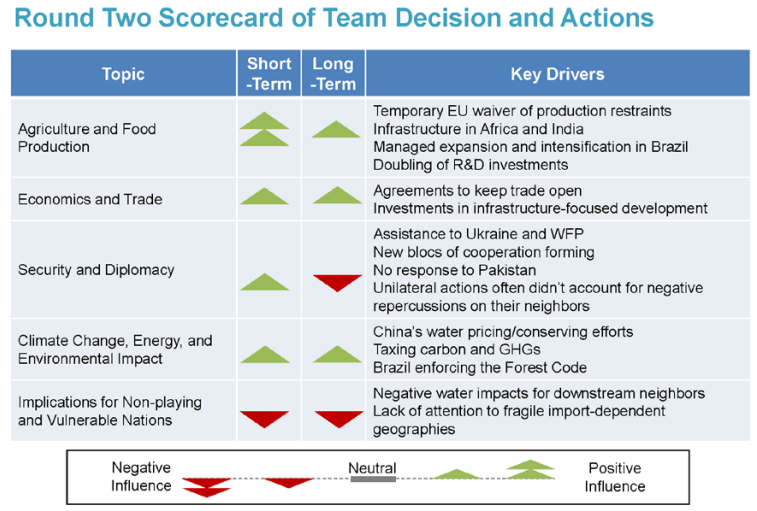
The European Union players agreed to reform Common Agricultural Policy away from direct payments (i.e., income supplements) to a public-funds-for-public-goods approach. For example, the team allocated 40 million Euros for a rewards system providing payments to agricultural producers engaged in good environmental behaviors (the environment being the public good). The team also temporarily suspended environmental regulations while simultaneously implementing a tax on meat when faced with the peak of the food crisis.
[The U.S.] focused on encouraging ready access to nutritious food while seeking to
These moves are considered a ‘positive influence’
promote diet shifts (less red meat, more poultry and fish) to simultaneously
achieve nutrition and food waste–reduction goals.
The habitual calls on the masses to voluntarily and involuntarily cut their meat consumption have been plentiful, and the calls for meat and environmental taxes have already been proposed. In recent times, many of these major global players have increased their calls to drastically reduce livestock production cuts.
In a more recent report published by the United Nations in the leadup to COP28, they insinuated that by 2050 half of the world’s meat production needs to be cut in half, and to adopt a plant-based diet and consume lab-grown meats instead. During COP28, 159 nations signed a pact that stated, “By 2025 we intend to strengthen our respective and shared efforts […] We affirm that agriculture and food systems must urgently adapt and transform in order to respond to the imperatives of climate change,” the declaration at COP28 reads. World Health Organization Director-General Tedros Adhanom Ghebreyesus also dropped in with a video message, stating: “Our food systems are harming the health of people and planet. Food systems contribute to over 30 percent of greenhouse gas emissions, and account for almost one-third of the global burden of disease. Transforming food systems is therefore essential by shifting for this healthier, diversified and more plant-based diets.”
Moreover, during COP28, Kristalina Georgieva, the head managing director of the International Monetary Fund (IMF), and Ajay Banga, President of the World Bank Group – which had an integral part in the Food Chain Reaction game – urged world governments to implement a carbon tax. The IMF head said during the forum:
We are a huge proponent of carbon price. We believe that carbon price has the potential of raising revenues in a way that is both equitable because the more you consume, the more you pollute, the more you pay. It is also an incentive to accelerate decarbonization. In other words, you would need less money because of consumption and production adapting to it.
Georgieva explained, which mirrors what the Food Chain Reaction simulation suggested, following an identical time line.
The remainder of the Food Chain Reaction simulation can be summarized in Bloomberg’s article, writing, “These hunger games proved to be never-ending. By 2027, the EU repealed its emergency measures on meat and regulations, as a series of large harvests built up supplies, though trouble persisted in Chad, Sudan and other parts of Africa that hadn’t invested in agriculture. Countries began working more closely with the United Nations to handle refugees from climate catastrophes.”
But prices, and temperatures, rose again at the end of the decade, showing how abnormal is expected to be the new normal in food and agriculture.
The Bloomberg article concluded, as seen in the CNA document
Another notable outcome highlighted in the document worth noting was “the promotion of technological innovation (in particular, genetically modified crop development),” and “discussions regarding wider acceptance of genetically modified seeds, particularly in the context of food crisis relief.” More specifically, “Research and development programs focused heavily on creating heat-tolerant and climate-resilient seed varieties, developing integrated pest management approaches, enhancing diffusion of production and processing technology, and improving the nutritive value of foodstuffs.”
Several months after the Russia-Ukraine conflict began, The WinePress detailed how the E.U. was decrying that a “global hunger crisis” was underway, and in preparation for it, the concept of gene-edited crops (as spoken of in the Hunger Games document) were heavily promoted. Not long later Politico ran a headline: “Like It Or Not,’ Gene-Edited Crops Are Coming To The EU.” Last year the E.U. has moved to relax regulations on GMOs and gene-edited crops.
Additionally, Bill Gates paid Kenya a visit in November, 2022, to discuss new and innovative technologies and practices for the agricultural sector there, where he spoke poorly of organic foods but hyped-up gene-edited ones.
Organic food is a small part of the market that’s very expensive. But every piece of bread I’ve ever eaten is high-productivity wheat, GMO wheat. Every piece of corn I’ve eaten is GMO corn.
These are things that billions of years of using these products have been done. […] These are proven, proven products – nobody’s trying to take something that hundreds of millions of people haven’t already been eating with the perfect safety record.
Gates said at the time
“The New Normal” And The Road Ahead
Months after the simulation was completed, Cargill hosted a speech discussing the results of the Hunger Game and how they and the world would tackle feeding 9 billion people by 2050. Though Cargill and many of their partners scrubbed their websites of links to this simulation, this one article managed to slip through the cracks.
David W. MacLennan, Cargill President and Chief Executive Officer Harvard Club of New York City, explained what they will be doing moving forward as a result of their findings during the simulation. As he explained during his speech, “The good news in our crisis simulation is that the dire conditions did drive action.” He praised the players as “they worked to increase agricultural productivity through climate-smart practices and began negotiating a global carbon cap, carbon taxes and other means to move toward a lower carbon economy.”
He then listed some of the steps that should be taken in light of the simulation:
Advocate for open trade. Trust-based open trade mitigates the impact of regional crop failures. In a future where extreme weather will be more frequent, the ability to move food with as little friction as possible from areas of surplus to areas of need will be critical.
Integrate sustainability measures into our operations and supply chains. This includes collaborating with others to end deforestation, being more responsible with water and natural resources and developing practical solutions to curb carbon emissions.
That’s why just over a year ago, in this city, Cargill signed the New York Declaration on Forests that states we will work with governments, NGOs, competitors and indigenous people to end deforestation by 2030.
Apply innovation to strengthen the tools farmers need to make the most of their land, especially in Africa. This includes ensuring farmers have access to market and credits, improving transport and storage, expanding the use of climate resistant seeds and other sustainable approaches to agriculture.
There is a critical role for all of us in the private sector to play in sustainably feeding 9 billion people. We can break through barriers, drive investment and inspire the innovation that will ensure the private sector has a much-needed seat at the table.
Cargill helped lead Food Chain Reaction because we know we cannot wait to act, and we can’t go it alone. Advocating for improvements in global food security and operating sustainable supply chains are core to our mission to be the global leader in nourishing people.
Food Chain Reaction showed that climate change won’t break the global food system … if we work cooperatively to make that system more resilient.
By working together we can strengthen our economies, our food system and our planet. We can ensure that by 2050, the 9 billion people on this planet are not just surviving, but thriving.
AUTHOR COMMENTARY
This long-forgotten simulation, that has been obviously scrubbed from the internet, has spelled out the actions and deeds that have played out and are currently being implemented right now. Frank Tufano – who discovered some of this information in 2021, which is where I first heard about this – made a good point in his video:
“There’s no burden proof at all whatsoever. What issue? How are you predicting years, a decade in advance, when the meteorologists can’t even get the weather right? These people love playing stupid.”
Well put; and it is just sickening when you realize just how well-planned out and scripted these events are, just like in the case of Event 201, Crimson Contagion, and “Scenarios for the Future of Technology and International Development,” these elitist groups prophesized these draconian mandates for a pandemic; or Cyber Polygon, that predicts cyber attacks that will tear-down the internet and the power grids, making the Covid lockdowns look like child’s play; or the 2019 document from Blackrock that openly discusses how they wanted massive inflation like we are seeing now to occur, as to justify digital IDs, CBDCs, and tokenization when hyperinflation takes root.
All these major events are very thoroughly crafted and planned, and when you have monopolies and a consolidation of power on everything, it’s not hard to eventually realize everything they say and do and want you to know is because there is so kind of racket underlying it. I mean, even the phrase “new normal” was repeatedly used, spoken of back in 2015 – a term we heard pounded down our throats ever since 2020 to describe the Orwellian nightmare that ensued:
It’s even more sickening when you have people that literally say, “There is a hope that a [fictional] crisis will create the ability for us to do things better and reconfigure the world in a better way” – and the organizers had to insert the word ‘fictional’ in there. Fathom that. Remove the inserted word and you have a guy who is salivating to launch a deliberate crisis to implement all these changes, and the Food Chain Reaction group printed it. Pure evil.
Furthermore, many have posited the idea that the Covid scare was just the dry run for the real thing, and that perhaps is most likely the truth.
In the case of these dates in the simulation, we very well could legitimately see carbon and meat taxes coming up, either this year or not long thereafter.
[1] Now the Spirit speaketh expressly, that in the latter times some shall depart from the faith, giving heed to seducing spirits, and doctrines of devils; [2] Speaking lies in hypocrisy; having their conscience seared with a hot iron; [3] Forbidding to marry, and commanding to abstain from meats, which God hath created to be received with thanksgiving of them which believe and know the truth.
1 Timothy 4:1-3
Most people will fall for whatever propaganda and shock event that’s created to get the masses into accepting this “new normal.” They always do.
I have suggested in times past that another shamdemic would be launched, and it would be blamed on livestock, something such as “bird flu,” which could then be used to justify meat restrictions, culling of livestock, farmland sequestration, and murdering wildlife, and so forth. But that is just speculation.
Whatever the case maybe, these taxes and asinine restrictions are coming and you need to do what you can, if you can, to prepare for it. Therefore, try to work with local farmers who have sustainable, organic practices, that are not sellouts, and network with them and keep good relations with them; and warn them while you are at it. Of course, trying to maintain your decentralized food supply and building food and water supplies would be of course advantageous as well.
Spread the word and get this out there, to warn who we still can.
[7] Who goeth a warfare any time at his own charges? who planteth a vineyard, and eateth not of the fruit thereof? or who feedeth a flock, and eateth not of the milk of the flock? [8] Say I these things as a man? or saith not the law the same also? [9] For it is written in the law of Moses, Thou shalt not muzzle the mouth of the ox that treadeth out the corn. Doth God take care for oxen? [10] Or saith he it altogether for our sakes? For our sakes, no doubt, this is written: that he that ploweth should plow in hope; and that he that thresheth in hope should be partaker of his hope. (1 Corinthians 9:7-10).
The WinePress needs your support! If God has laid it on your heart to want to contribute, please prayerfully consider donating to this ministry. If you cannot gift a monetary donation, then please donate your fervent prayers to keep this ministry going! Thank you and may God bless you.





I dugg some of you post as I thought they were very beneficial very helpful
Absolutely indited subject material, Really enjoyed reading.
Rattling nice layout and excellent written content, very little else we want : D.
It’s hard to find knowledgeable people on this topic, but you sound like you know what you’re talking about! Thanks
Youre so cool! I dont suppose Ive read anything like this before. So good to seek out anyone with some original ideas on this subject. realy thanks for starting this up. this web site is one thing that is needed on the web, somebody with a bit of originality. useful job for bringing one thing new to the internet!
hi!,I like your writing very much! share we communicate more about your article on AOL? I require a specialist on this area to solve my problem. Maybe that’s you! Looking forward to see you.
This is a very good tips especially to those new to blogosphere, brief and accurate information… Thanks for sharing this one. A must read article.
I loved as much as you’ll obtain performed right here. The cartoon is tasteful, your authored subject matter stylish. however, you command get got an impatience over that you wish be handing over the following. unwell for sure come further beforehand again as precisely the same just about a lot regularly within case you defend this hike.
Can I just say what a relief to find someone who actually knows what theyre talking about on the internet. You definitely know how to bring an issue to light and make it important. More people need to read this and understand this side of the story. I cant believe youre not more popular because you definitely have the gift.
An impressive share, I just given this onto a colleague who was doing a little analysis on this. And he in fact bought me breakfast because I found it for him.. smile. So let me reword that: Thnx for the treat! But yeah Thnkx for spending the time to discuss this, I feel strongly about it and love reading more on this topic. If possible, as you become expertise, would you mind updating your blog with more details? It is highly helpful for me. Big thumb up for this blog post!
You made some first rate points there. I looked on the web for the problem and found most people will associate with along with your website.
This web site is really a walk-through for all of the info you wanted about this and didn’t know who to ask. Glimpse here, and you’ll definitely discover it.
Appreciating the time and effort you put into your website and in depth information you provide. It’s good to come across a blog every once in a while that isn’t the same outdated rehashed information. Great read! I’ve bookmarked your site and I’m adding your RSS feeds to my Google account.
Greetings! Very helpful advice on this article! It is the little changes that make the biggest changes. Thanks a lot for sharing!
Keep working ,great job!
I have not checked in here for some time as I thought it was getting boring, but the last several posts are great quality so I guess I will add you back to my daily bloglist. You deserve it my friend 🙂
When I originally commented I clicked the -Notify me when new comments are added- checkbox and now each time a comment is added I get four emails with the same comment. Is there any way you can remove me from that service? Thanks!
You have brought up a very superb details, thanks for the post.
I am really enjoying the theme/design of your site. Do you ever run into any web browser compatibility issues? A few of my blog readers have complained about my website not working correctly in Explorer but looks great in Opera. Do you have any solutions to help fix this problem?
Keep up the great piece of work, I read few blog posts on this web site and I conceive that your site is rattling interesting and has got bands of great information.
Its like you read my mind! You appear to know a lot about this, like you wrote the book in it or something. I think that you can do with a few pics to drive the message home a bit, but other than that, this is excellent blog. A fantastic read. I’ll definitely be back.
The Pink Salt Trick is a minimalist but effective morning routine: Just drink a glass of lukewarm water mixed with a pinch of Himalayan pink salt as soon as you wake up.
I simply couldn’t leave your site before suggesting that I really loved the usual information an individual provide in your guests? Is going to be again frequently in order to inspect new posts
I have been reading out some of your stories and it’s nice stuff. I will make sure to bookmark your website.
The Pink Salt Trick is a minimalist but effective morning routine: Just drink a glass of lukewarm water mixed with a pinch of Himalayan pink salt as soon as you wake up.
This is very fascinating, You’re an excessively professional blogger. I’ve joined your rss feed and stay up for in the hunt for more of your fantastic post. Also, I’ve shared your website in my social networks!
The Pink Salt Trick is a minimalist but effective morning routine: Just drink a glass of lukewarm water mixed with a pinch of Himalayan pink salt as soon as you wake up.
I liked as much as you’ll receive performed right here. The comic strip is attractive, your authored subject matter stylish. nevertheless, you command get bought an impatience over that you want be delivering the following. sick indisputably come more earlier again as exactly the similar just about a lot ceaselessly inside of case you shield this hike.
The Pink Salt Trick is a minimalist but effective morning routine: Just drink a glass of lukewarm water mixed with a pinch of Himalayan pink salt as soon as you wake up.
This site is my intake, very good design and perfect subject matter.
Very nice post. I just stumbled upon your blog and wanted to say that I have truly enjoyed browsing your blog posts. After all I’ll be subscribing to your rss feed and I hope you write again soon!
Deference to website author, some great information .
Very interesting information!Perfect just what I was looking for!
You have brought up a very excellent points, thanks for the post.
I wanted to type a small remark to be able to express gratitude to you for all of the stunning tips you are sharing on this site. My rather long internet look up has now been rewarded with beneficial facts and strategies to go over with my partners. I ‘d mention that many of us site visitors actually are truly blessed to dwell in a notable place with so many wonderful people with insightful ideas. I feel somewhat fortunate to have encountered the web pages and look forward to really more thrilling minutes reading here. Thank you once more for everything.
I saw a lot of website but I conceive this one has got something extra in it in it
I was recommended this blog by my cousin. I’m not sure whether this post is written by him as no one else know such detailed about my problem. You are amazing! Thanks!
Everything is very open and very clear explanation of issues. was truly information. Your website is very useful. Thanks for sharing.
Heya i’m for the first time here. I found this board and I find It truly useful & it helped me out much. I hope to offer one thing again and aid others such as you helped me.
Outstanding post, you have pointed out some good details , I likewise conceive this s a very superb website.
An impressive share, I simply given this onto a colleague who was doing just a little evaluation on this. And he in fact purchased me breakfast as a result of I found it for him.. smile. So let me reword that: Thnx for the treat! However yeah Thnkx for spending the time to debate this, I really feel strongly about it and love reading extra on this topic. If possible, as you change into expertise, would you thoughts updating your blog with more details? It is extremely helpful for me. Huge thumb up for this blog post!
Hi there would you mind letting me know which hosting company you’re working with? I’ve loaded your blog in 3 different browsers and I must say this blog loads a lot faster then most. Can you suggest a good internet hosting provider at a honest price? Many thanks, I appreciate it!
I know this if off topic but I’m looking into starting my own blog and was curious what all is needed to get set up? I’m assuming having a blog like yours would cost a pretty penny? I’m not very web smart so I’m not 100 positive. Any suggestions or advice would be greatly appreciated. Thanks
You are a very smart individual!
Very interesting information!Perfect just what I was searching for!
Good V I should certainly pronounce, impressed with your site. I had no trouble navigating through all the tabs as well as related info ended up being truly easy to do to access. I recently found what I hoped for before you know it at all. Quite unusual. Is likely to appreciate it for those who add forums or something, web site theme . a tones way for your client to communicate. Nice task..
I loved as much as you’ll receive carried out right here. The sketch is attractive, your authored subject matter stylish. nonetheless, you command get bought an nervousness over that you wish be delivering the following. unwell unquestionably come further formerly again as exactly the same nearly a lot often inside case you shield this hike.
Some really good info , Glad I noticed this.
hello!,I like your writing so much! share we communicate more about your article on AOL? I need a specialist on this area to solve my problem. Maybe that’s you! Looking forward to see you.
There is noticeably a bundle to know about this. I assume you made sure good factors in options also.