

The goal of this move, according to Ardern and government officials, is to ultimately reduce carbon and methane emissions.
There is no question that we need to cut the amount of methane we are putting into the atmosphere, and an effective emissions pricing system for agriculture will play a key part in how we achieve that.
James Shaw, New Zealand’s climate change minister, he told The Telegraph

The WinePress has routinely reported on the international efforts to prime the masses to stop eating meats, and adopt more plant-based diets per ingesting bugs; or heavily processed faux meats made from plant-based formulas, and lab-grown or cell-cultured meats from a lab.
According to the Absolute Zero agenda goals for 2030 and 2050,
[By 2030] National consumption of beef and lamb drops by 50%, along with reduction in frozen ready meals and air-freighted food imports. [After that] Beef and lamb [will be] phased out, along with all imports not transported by train; fertilizer use greatly reduced. The think tank wrote
If this tax is imposed upon Kiwi farmers, it would result in higher prices for everyone else. Reported by Today FM, Paul O’Brien, chair of the IFA’s environmental committee, who is also a sheep farmer, states:
At the moment these are still only [a] think-tank giving recommendations.
I would be strongly concerned of the direction that this is going.
Obviously I would be worried about the bottom line – if there is going to be any additional taxes or levies put on my farming system, how will be able to recuperate that back in the marketplace at the moment?
I see this as being very much a case of this will have to go back then to the end consumer, the end consumer will be expected to pay more money for produce.
The taxation on farming will ultimately have to go back to the end consumer.
But Peter Thorne, a climate scientist, notes that it was New Zealand who helped formulate the bill’s dynamics.
There are really interesting parts of it, for example, that the farmers have been involved with the design of this process.
So broadly speaking, anything that starts to bring farmers and policy-makers together and stop them working apart is to be welcomed.
There are of course many details in this which will require being hammered out, and there is some concern that the price is far too low.
But it will interesting to see how it develops.
He additionally explained that the tax would be measured by the size of the herds themselves and not each individual animal.
You clearly cannot measure the emissions from every single animal, particularly if they’re out on pasture.
So there are assumptions… we’re able to measure and quantify in experimental conditions the affects of things like food additives.
Dutch Government Grants €60 Million To Enhance Lab-Grown Meat Industry
Radio New Zealand (RNZ) further details what this bill will do, which also ‘recommends letting farmers count their emissions and get a discounted levy for making reductions or planting trees,’ the station reported. That discounted money will then be reinvested for more emission reductions schemes, and pay for the program itself.
It is expected to cost $114 million to $144m to set up, and then $27m annually – although as much as $47m a year to run in the first few years.
It appears the annual cost to run the programme over its first few years is tens of millions of dollars more than the expected revenue gathered. However, it gets into the black as time goes on and the price of gases increases.
The Kiwi radio station explained
Our recommended approach would enhance New Zealand’s reputation as world leaders in low-emission food production and keep us ahead of our competitors.
Waka Eke Noa group chair Michael Ahie said
However, other reports show that 99% of farmers are not interested in linking up with this trading scheme, according to Farmers Weekly.
This new move would affect beef, lamb, and deer meat production more compared to milk and diary products.
If the bill goes through, ‘Farmers who have more than 550 cattle, sheep, deer or goats; 50 dairy cattle; use at least 40 tons of synthetic fertilizer; have 700 swine, 50,000 poultry, must take part in the scheme,’ RNZ further notes. They will have to 1) Report their emissions numbers; 2) Have a greenhouse gas management plan; 3) Pay for methane and long-lived gas emissions.
The transition will cost farmers $750 for the initial transition, and then somewhere between $1200-1600 annually after that.
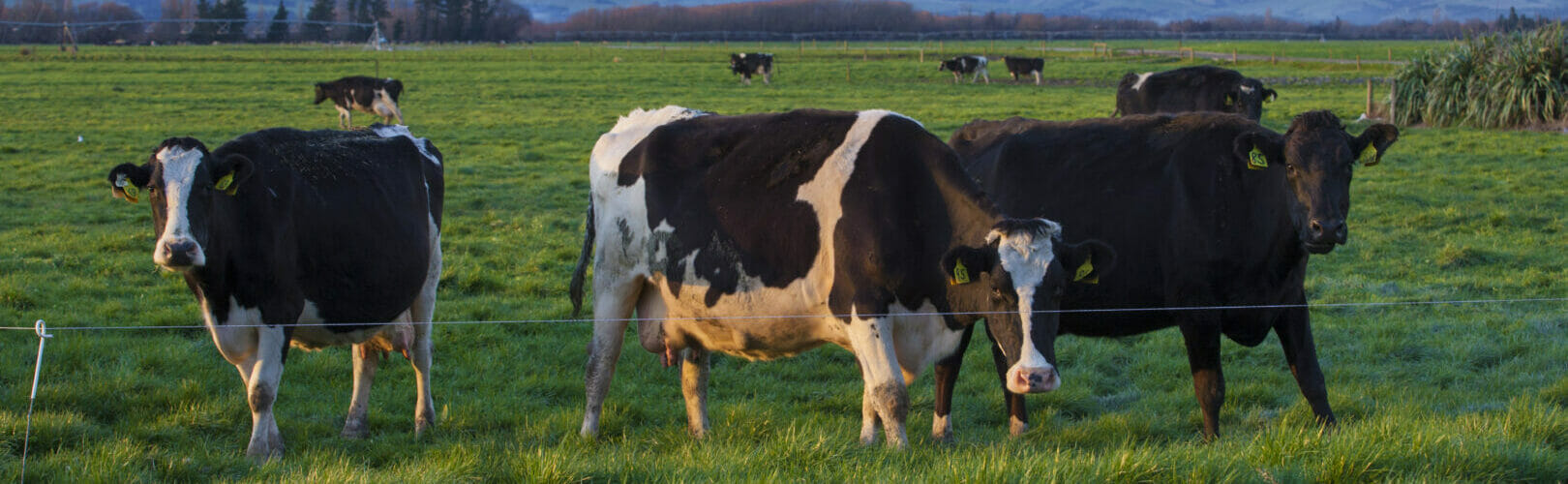
New Zealand is home to approximately 10 million cows and 26 million sheep grazing the fields of the island nation, Breitbart reports. Therefore records indicate that this is roughly half of the nation’s emissions.
‘Yet, despite the large livestock population, the Pacific Ocean island country only ranks 74th globally in terms of carbon emissions, accounting for just 0.09 per cent of the world’s emissions, meaning that such a tax would likely have negligible impacts on supposedly man-made climate change,’ Breitbart wrote.
The bill is set to be finalized by December this year, and would take effect by 2025.
The WP has additionally that is inflation continues to rip higher the media has taken the opportunity to inflect upon the masses the necessity of going plant-based instead.
British Health Officials Warn Residents That You Could Catch Monkeypox From Eating Meat
AUTHOR COMMENTARY
[1] Now the Spirit speaketh expressly, that in the latter times some shall depart from the faith, giving heed to seducing spirits, and doctrines of devils; [2] Speaking lies in hypocrisy; having their conscience seared with a hot iron; [3] Forbidding to marry, and commanding to abstain from meats, which God hath created to be received with thanksgiving of them which believe and know the truth.1 Timothy 4:-3
Again and again we see Bible prophecy coming to pass. All the new Vatican perversions say ‘foods’ instead of “meats” like the King James Bible reads. And while it is true that it is expected to see veganism pushed as well, that include animal alternatives for animal byproducts; the real heart of the battle is to get the masses off of eating meats, as demonstrated by this report.
And if New Zealand is set to do this, Australia will probably follow in lockstep, as with large portions of Europe and North America. Kiwi and Aussie meat is very high quality, versus the conventional feedlot crap that is quite pervasive here in the States, though there are still options to get pastured-raised and regenerative meats the way God intended. But the costs for these imported meats will greatly rise, so much so these companies may not be able to afford to sell to places like the U.S.
Assuming this gets passed, by the time it comes into full-effect, inflation and economic ruin will have already occurred. By then most farmers will have already defaulted or pushed to their wits end.
[7] Who goeth a warfare any time at his own charges? who planteth a vineyard, and eateth not of the fruit thereof? or who feedeth a flock, and eateth not of the milk of the flock? [8] Say I these things as a man? or saith not the law the same also? [9] For it is written in the law of Moses, Thou shalt not muzzle the mouth of the ox that treadeth out the corn. Doth God take care for oxen? [10] Or saith he it altogether for our sakes? For our sakes, no doubt, this is written: that he that ploweth should plow in hope; and that he that thresheth in hope should be partaker of his hope. (1 Corinthians 9:7-10).
The WinePress needs your support! If God has laid it on your heart to want to contribute, please prayerfully consider donating to this ministry. If you cannot gift a monetary donation, then please donate your fervent prayers to keep this ministry going! Thank you and may God bless you.





You got a very good website, Glad I discovered it through yahoo.
Its excellent as your other content : D, thanks for putting up. “Even Albert Einstein reportedly needed help on his 1040 form.” by Ronald Reagan.
Awesome blog! Is your theme custom made or did you download it from somewhere? A theme like yours with a few simple adjustements would really make my blog jump out. Please let me know where you got your theme. Appreciate it
I couldn’t resist commenting
An impressive share, I just given this onto a colleague who was doing a little analysis on this. And he in fact bought me breakfast because I found it for him.. smile. So let me reword that: Thnx for the treat! But yeah Thnkx for spending the time to discuss this, I feel strongly about it and love reading more on this topic. If possible, as you become expertise, would you mind updating your blog with more details? It is highly helpful for me. Big thumb up for this blog post!
Great post. I was checking continuously this blog and I am impressed! Extremely helpful info specifically the last part 🙂 I care for such info a lot. I was seeking this particular info for a very long time. Thank you and best of luck.
Real great visual appeal on this internet site, I’d rate it 10 10.
Heya! I just wanted to ask if you ever have any trouble with hackers? My last blog (wordpress) was hacked and I ended up losing months of hard work due to no backup. Do you have any solutions to stop hackers?
Good info. Lucky me I reach on your website by accident, I bookmarked it.
Merely a smiling visitor here to share the love (:, btw outstanding style and design.
I was examining some of your posts on this site and I believe this site is really informative ! Continue posting.
I got good info from your blog
I have been surfing on-line more than three hours as of late, but I never discovered any fascinating article like yours. It is beautiful price sufficient for me. In my view, if all website owners and bloggers made excellent content material as you did, the net can be a lot more useful than ever before. “Dignity is not negotiable. Dignity is the honor of the family.” by Vartan Gregorian.
Its wonderful as your other posts : D, thankyou for posting.
I real delighted to find this internet site on bing, just what I was searching for : D also saved to bookmarks.
With almost everything that appears to be building inside this particular subject matter, all your viewpoints are generally fairly refreshing. However, I appologize, but I can not give credence to your entire plan, all be it refreshing none the less. It appears to everyone that your commentary are generally not completely rationalized and in reality you are yourself not even completely convinced of your assertion. In any event I did take pleasure in looking at it.
I was reading through some of your posts on this website and I believe this website is rattling instructive! Keep on posting.
Oh my goodness! an incredible article dude. Thank you Nevertheless I’m experiencing subject with ur rss . Don’t know why Unable to subscribe to it. Is there anyone getting an identical rss problem? Anybody who knows kindly respond. Thnkx
That is really attention-grabbing, You’re an excessively skilled blogger. I’ve joined your rss feed and look forward to seeking extra of your fantastic post. Also, I’ve shared your website in my social networks!
I have recently started a website, the information you provide on this site has helped me tremendously. Thanks for all of your time & work.
I really appreciate this post. I have been looking all over for this! Thank goodness I found it on Bing. You have made my day! Thx again!
Wow! Thank you! I continuously wanted to write on my website something like that. Can I include a portion of your post to my site?
Greetings! Quick question that’s completely off topic. Do you know how to make your site mobile friendly? My site looks weird when browsing from my iphone 4. I’m trying to find a theme or plugin that might be able to resolve this issue. If you have any suggestions, please share. Many thanks!
fantastic post.Ne’er knew this, thankyou for letting me know.
Regards for all your efforts that you have put in this. very interesting info .
Keep working ,impressive job!
Woah! I’m really digging the template/theme of this blog. It’s simple, yet effective. A lot of times it’s tough to get that “perfect balance” between user friendliness and visual appeal. I must say you have done a superb job with this. Also, the blog loads super fast for me on Safari. Exceptional Blog!
Lovely just what I was looking for.Thanks to the author for taking his time on this one.
가격을 비교할 때는 기본 요금뿐 아니라 주류·음료와 연장 비용이 포함되는지도 확인해야 합니다. 제주 가라오케 가격 확인 기준에 비용을 항목별로 확인하는 방법이 정리돼 있습니다.
As I website possessor I conceive the subject material here is real good, thanks for your efforts.
I’ve been exploring for a little for any high quality articles or blog posts on this kind of space . Exploring in Yahoo I at last stumbled upon this web site. Studying this information So i am glad to convey that I have a very just right uncanny feeling I came upon exactly what I needed. I most for sure will make sure to don’t put out of your mind this web site and provides it a glance regularly.
Whats up very nice web site!! Man .. Excellent .. Wonderful .. I’ll bookmark your blog and take the feeds additionally…I’m glad to search out numerous helpful information here within the post, we want work out more techniques in this regard, thank you for sharing.
Hi, just required you to know I he added your site to my Google bookmarks due to your layout. But seriously, I believe your internet site has 1 in the freshest theme I??ve came across. It extremely helps make reading your blog significantly easier.
The next time I read a blog, I hope that it doesnt disappoint me as much as this one. I mean, I know it was my choice to read, but I actually thought youd have something interesting to say. All I hear is a bunch of whining about something that you could fix if you werent too busy looking for attention.
I visited a lot of website but I think this one holds something extra in it in it
Thanks for every other great article. The place else may just anybody get that type of info in such an ideal means of writing? I have a presentation subsequent week, and I’m on the search for such information.
I’m not that much of a internet reader to be honest but your blogs really nice, keep it up! I’ll go ahead and bookmark your website to come back later. All the best
Neat blog! Is your theme custom made or did you download it from somewhere? A theme like yours with a few simple tweeks would really make my blog stand out. Please let me know where you got your theme. Appreciate it
Whats up are using WordPress for your site platform? I’m new to the blog world but I’m trying to get started and set up my own. Do you require any html coding knowledge to make your own blog? Any help would be really appreciated!
Can I just say what a relief to find someone who actually knows what theyre talking about on the internet. You definitely know how to bring an issue to light and make it important. More people need to read this and understand this side of the story. I cant believe youre not more popular because you definitely have the gift.
You are my aspiration, I possess few web logs and rarely run out from post :). “Truth springs from argument amongst friends.” by David Hume.
I enjoy what you guys are usually up too. Such clever work and exposure! Keep up the superb works guys I’ve added you guys to blogroll.
Simply wanna input on few general things, The website style is perfect, the subject matter is rattling wonderful. “All movements go too far.” by Bertrand Russell.
I’ve recently started a blog, the information you offer on this website has helped me greatly. Thank you for all of your time & work.
Can I just say what a relief to find someone who actually knows what theyre talking about on the internet. You definitely know how to bring an issue to light and make it important. More people need to read this and understand this side of the story. I cant believe youre not more popular because you definitely have the gift.
We absolutely love your blog and find nearly all of your post’s to be exactly what I’m looking for. Do you offer guest writers to write content in your case? I wouldn’t mind publishing a post or elaborating on some of the subjects you write in relation to here. Again, awesome blog!
Its excellent as your other articles : D, appreciate it for posting. “So, rather than appear foolish afterward, I renounce seeming clever now.” by William of Baskerville.
Lovely just what I was looking for.Thanks to the author for taking his clock time on this one.
Greetings I am so thrilled I found your blog, I really found you by mistake, while I was browsing on Google for something else, Anyways I am here now and would just like to say thanks a lot for a incredible post and a all round exciting blog (I also love the theme/design), I don’t have time to browse it all at the minute but I have saved it and also added your RSS feeds, so when I have time I will be back to read much more, Please do keep up the excellent job.
Wonderful goods from you, man. I have understand your stuff previous to and you’re just too excellent. I really like what you have acquired here, certainly like what you are saying and the way in which you say it. You make it entertaining and you still take care of to keep it smart. I cant wait to read much more from you. This is really a wonderful website.